
First, is it safe to wait for a booking?
Most back pain is not caused by serious damage and settles with time, movement and sensible management. Even so, a few signs mean you should go to a GP or emergency department instead of waiting for a chiropractic appointment:
- Numbness around the groin or buttocks, or new trouble controlling your bladder or bowel — go to emergency
- Leg weakness that is getting worse
- Fever, unexplained weight loss, or a history of cancer
- Pain after a significant fall or car accident
- Pain that is constant and severe at night regardless of position
What a chiropractor can and cannot do for back pain
For common, non-specific low back pain, guidelines support staying active and list spinal manipulation among the reasonable short-term options, usually alongside exercise and advice. It is not a cure, and no one can promise how a particular back will respond.
A chiropractor cannot prescribe medication or order every type of investigation. If your examination suggests something other than a muscle or joint problem, the right step is referral, and our chiropractors will tell you if that applies.
How your back is assessed
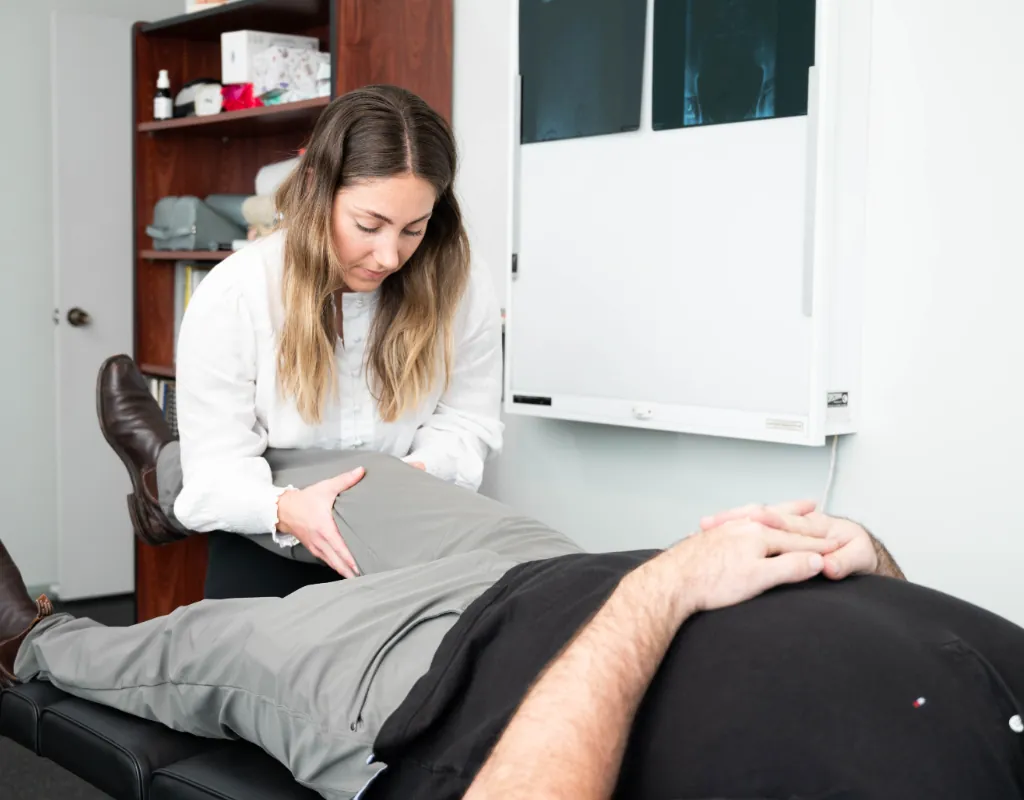
Your first appointment takes about an hour. Your chiropractor asks how the pain began, where it travels, what helps and what makes it worse, and how it affects sleep, work and getting around. The examination looks at how your spine and hips move, then checks nerve function in the legs: reflexes, sensation and strength.
An x-ray is sometimes requested after the examination. It is not needed for most back pain and depends on what your chiropractor finds.
What the options look like
At the second visit — a report of findings of about 30 minutes — your chiropractor explains their view and any proposed plan. For back pain this might include specific adjustments, soft-tissue work, a home exercise programme and advice on lifting, sitting or sleep. You can ask about the alternatives, including managing it yourself for a while and reviewing later.
Keeping moving until your appointment
Gentle walking and normal daily activity generally help more than bed rest. Change position often, avoid heavy lifting for a few days, and use heat if it eases muscle tension. If over-the-counter pain relief is something you are considering, check with a pharmacist that it is safe with your other medications.
What to bring
Bring a list of your medications, any scan reports, and notes on when the pain started and what changes it. If you have a DVA card or an EPC referral from your GP, bring that too. Wear clothing that lets you bend and move comfortably.
Getting to the clinic from Doonside
Doonside is west of Blacktown. The clinic is on Bungarribee Road, with parking and disabled ramp access. If sitting in the car is uncomfortable, a cushion behind your lower back and a seat set slightly more upright can help. Use the directions link for a live route.
More detail: our back pain guide, and planning a visit from Doonside.