
What tends to cause back pain
Back pain can come from the joints, discs, muscles and ligaments of the spine, and often from several at once. Common triggers include lifting or twisting, a sudden increase in activity, long periods of sitting, poor sleep and stress. Sometimes there is no obvious trigger at all.
Scans often show changes such as disc bulges or wear in people with no pain, so imaging findings do not always explain symptoms. A clinical assessment is usually the more useful first step.
How we assess your back
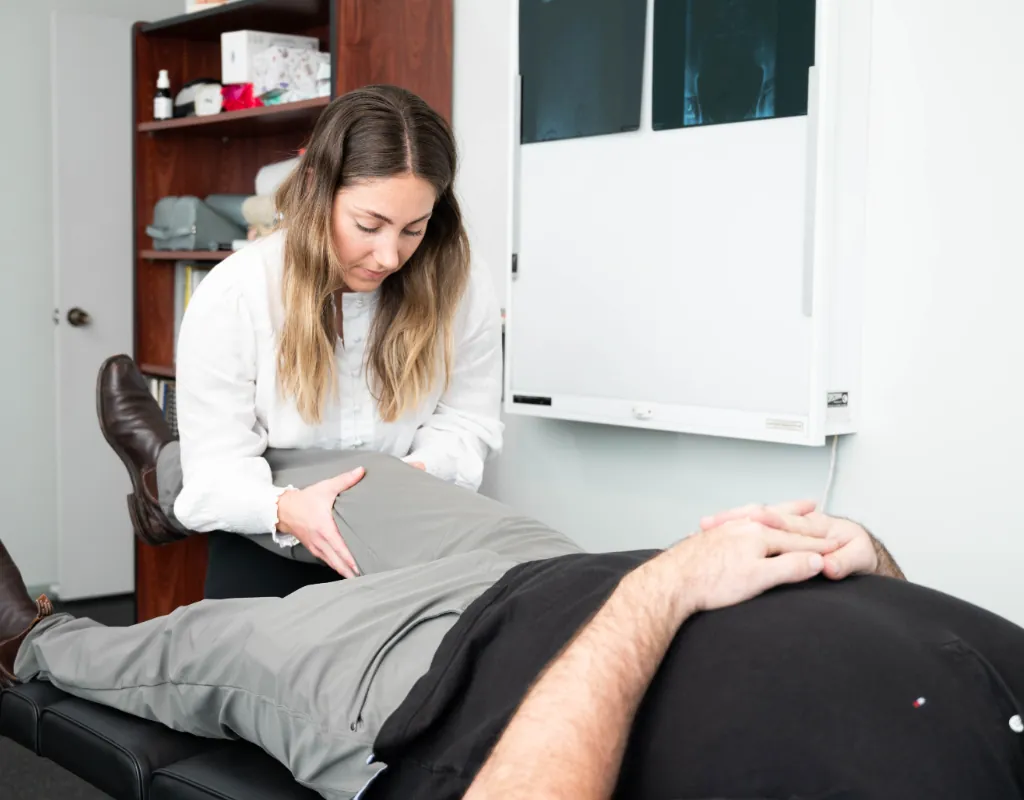
Your chiropractor asks how the pain started, what eases or aggravates it and how it affects daily life. They then examine your movement, the joints and muscles of the spine and pelvis, and nerve function in the legs — reflexes, sensation and strength.
This helps separate straightforward mechanical back pain from pain that involves nerves, like sciatica, or symptoms that need medical investigation.
What care may involve
If chiropractic care is suitable, your plan could include:
- Spinal adjustments or gentler mobilisation to improve movement
- Soft tissue techniques or dry needling for muscle tension
- Advice on sleeping, sitting, lifting and pacing activity
- Graded exercises to rebuild strength and confidence
Self-care you can start today
Keep moving within comfort — short walks are a good start. Change position regularly, use heat if it eases muscle spasm, and return to normal activities gradually. Avoid prolonged bed rest. If you have been prescribed pain relief, follow your doctor's or pharmacist's advice.
Your first back pain appointment
Expect to be asked when the pain started, where you feel it, whether it spreads into the legs and how it affects sleep and work. Wear clothing you can move in. Your chiropractor will explain what they think is happening in plain language and suggest a plan, which may begin on the same day if treatment is appropriate.
When to seek urgent medical care
Go to your GP or emergency department promptly if back pain comes with:
- Loss of bladder or bowel control, or numbness around the groin or buttocks
- Progressive weakness in one or both legs
- Back pain with fever, unexplained weight loss or a history of cancer
- Pain after a significant fall, car accident or other trauma
Further reading: healthdirect — Back pain
This page is general information only and is not a substitute for individual advice. If you are unsure whether your symptoms need urgent care, call your GP, healthdirect on 1800 022 222, or 000 in an emergency.