Chiropractic adjustments in Blacktown

An adjustment is one of the most recognisable parts of chiropractic care, and also one of the most misunderstood. Here is a plain-English guide to what it is, the different ways we perform it and what you might feel.

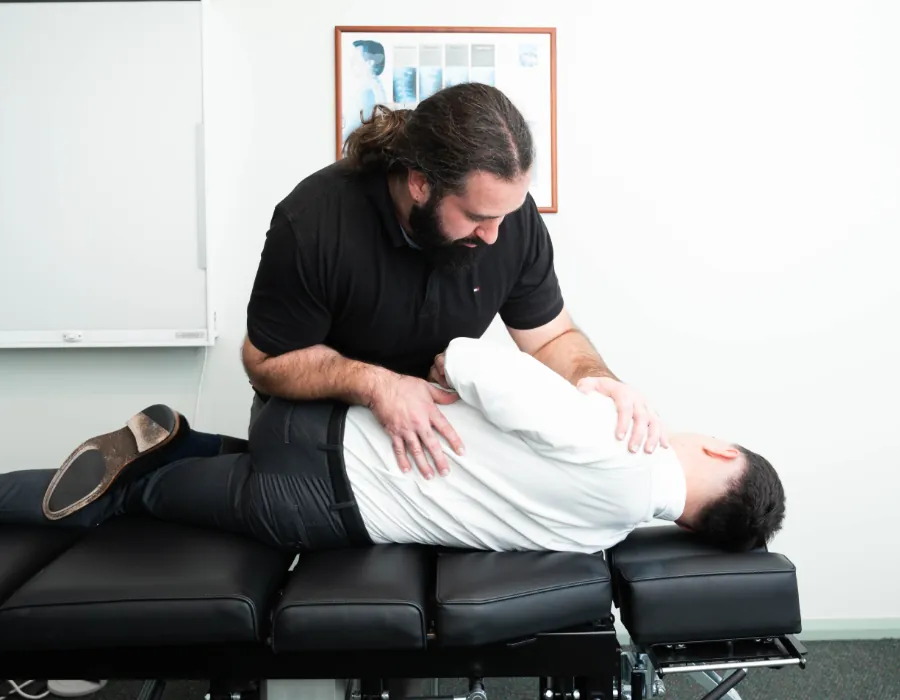
Dr Mark providing hands-on care on a treatment table

What adjustments may help with

Back pain

Lower and upper back pain: likely causes, what an assessment looks for and how care is planned.

Back pain is one of the most common reasons people visit a chiropractor, and one of the most common reasons Australians miss work. Most episodes are not caused by serious damage, but they can be painful and worrying.

Read our back pain guide
Neck pain and stiffness

Stiff, sore or painful necks (including after whiplash), with careful assessment and gentle options.

A stiff or sore neck can make driving, working at a screen and sleeping feel like hard work. Neck pain is common and usually settles, but an assessment can help when it lingers, keeps returning or follows an injury.

Read our neck pain guide
Headaches

Tension-type, neck-related and recurring headaches: what may contribute and when to get help fast.

Headaches have many causes, and only some are related to the neck and muscles. Our chiropractors consult on headaches, including migraine and tension-type headache, and help work out whether musculoskeletal factors may be playing a part.

Read our headaches guide
Aches and stiffness

Persistent, general or hard-to-pin-down aches: a whole-person look at what is going on.

Not every pain has a clear starting point. Some people simply feel achy and stiff in several places, or have niggles that move around. This page is about those general, ongoing aches and how we approach them.

Read our aches & stiffness guide

Your care, step by step

Stage 1 of 3

Your first visits, step by step

Your assessment helps us understand what’s troubling you and whether chiropractic care is right for you.

See what happens at each appointment
  1. Initial Consultation

    About an hour

    On your visit to the clinic, you will be welcomed by our friendly receptionists. You will need to fill out a few details, which we can assist with.

    Then you will meet with your chiropractor to discuss your reasons for visiting the clinic and what you are hoping to achieve. Your chiropractor will ask a number of other questions and physically examine you.

    This initial examination may include:

    • Evaluation of your posture
    • Orthopedic testing
    • Neurological testing
    • Muscle strength/length analysis
    • Specific chiropractic tests and procedures
  2. Report of Findings

    About 30 minutes

    The Report of Findings is completed on your second visit, after your chiropractor has reviewed and analysed the findings from the initial consultation. It is a take home document for you which explains your condition, if and how chiropractic treatment can help.

    If your diagnosis is one that requires further investigation or specialist intervention, your chiropractor will refer you to an appropriate practitioner.

    It describes your treatment plan, which may include:

    • Specific chiropractic adjustments
    • Soft-tissue muscle massage
    • Exercise regimes
    • Rehabilitation advice
    • Nutrition advice
    • Ergonomic advice
  3. Regular Visits

    About 15 minutes

    At each visit you will be re-assessed for progress against your treatment plan and treated as required. You and your chiropractor will assess your progress on a regular basis.

A chiropractor listening to a patient during a consultation

Stage 2 of 3

How we decide whether to adjust

Before recommending an adjustment, your chiropractor considers your history, examination findings, general health and preferences.

When an adjustment may suit, and when it may not
  1. When an adjustment may suit

    A stiff, sore joint in an otherwise healthy person may suit an adjustment.

  2. When gentler care may fit

    A recent fracture, osteoporosis or certain medications may point towards gentler mobilisation instead.

  3. When the picture is unclear

    If the picture is unclear, they may start with lower-force techniques and review how you respond before doing more.

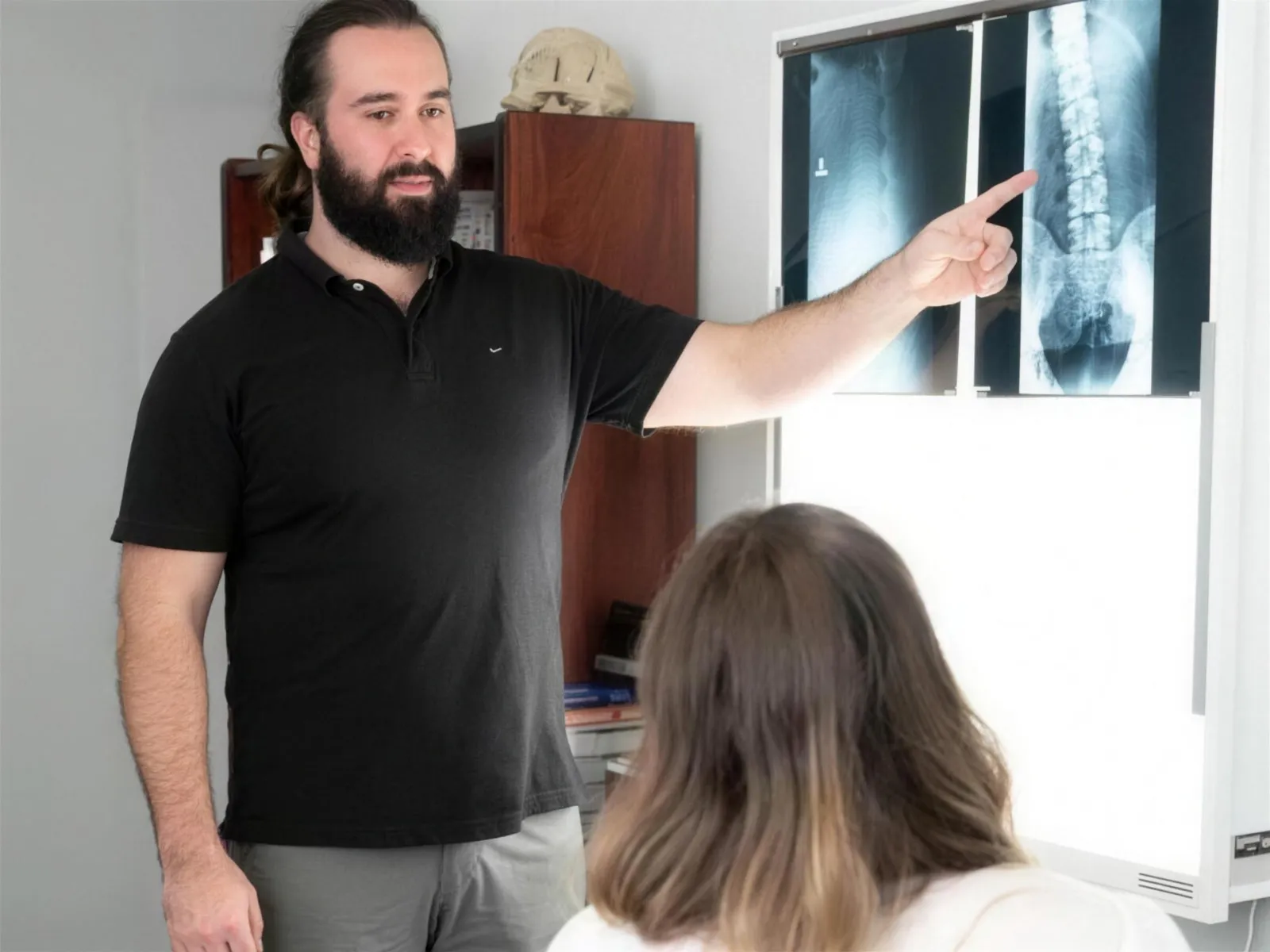
A chiropractor explaining an X-ray to a patient

Stage 3 of 3

What it feels like

Most adjustments are quick, and you may feel brief pressure. Let your chiropractor know if anything feels uncomfortable so they can adapt their approach. Some people notice mild soreness or stiffness for a day or so afterwards, similar to after exercise.

What can help afterwards

These can help:

  • Drinking water
  • Staying gently active
  • Following your chiropractor's advice
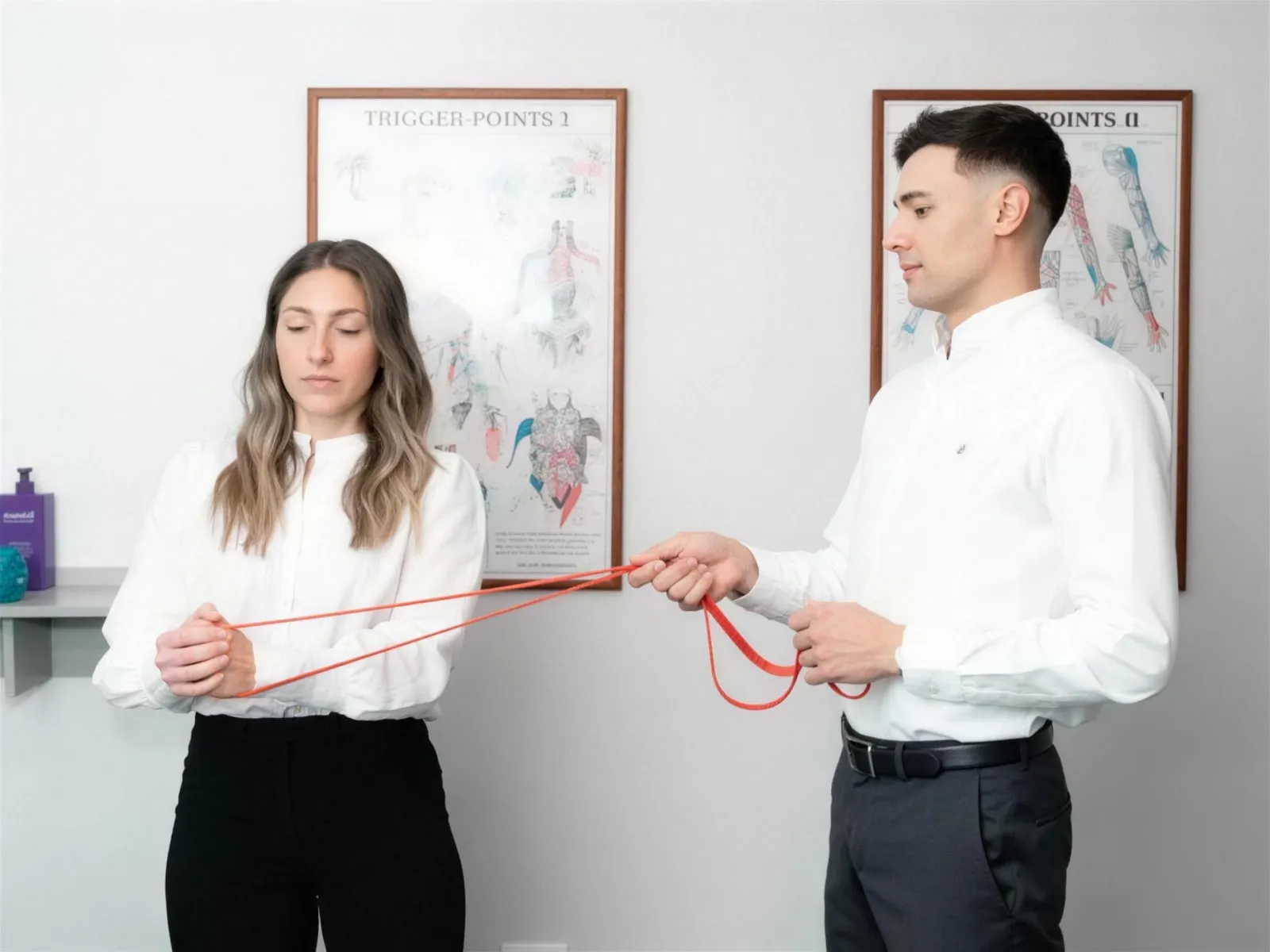
A chiropractor guiding a patient through a resistance-band exercise

Choose from an experienced team of chiropractors

Talking about pain with someone new can feel personal, so you choose who treats you. Our team includes male and female chiropractors with different clinical interests, from sport and recovery to teaching chiropractic technique.

  • Portrait of Dr Mark

    Dr Mark

    Strength sports

    About Dr Mark

    Dr Mark is an experienced chiropractor having graduated from Macquarie University with a Master’s Degree in Chiropractic Science. As well as his clinical duties, Mark also supervises Master’s level students at University to help keep his chiropractic knowledge and skills up with the latest techniques and knowledge.

    Mark, himself, is a keen sports person and his latest sporting passion is that he has become an Australian level Power Lifting competitor. This combination of experience, current learning and passion for sports allows Mark a unique insight into the required treatment plans for his patients, the expertise to carry out the treatment and the empathy to connect with them.

    Read full bio
  • Portrait of Dr Robert

    Dr Robert

    Biomechanics

    About Dr Robert

    Dr Robert has graduated with a Bachelor and Masters of Chiropractic Science from Macquarie University in 2022. He utilises a multi-modal approach to health care involving mobilisation, rehabilitation, soft tissue massage, taping and adjustments to achieve the best outcome and result for his patients.

    Robert has been working as a chiropractic assistant and receptionist since 2013 learning the ins and outs of clinical life absorbing tips and tricks along the way. In this time, he has taken a deep interest in human body biomechanics and the art of chiropractic.

    Robert likes to live an active lifestyle taking a great interest in golf, tennis and skiing!

    Read full bio
  • Professor Sharyn Eaton

    43 years’ experience

    About Professor Sharyn Eaton

    Professor Sharyn Eaton (OAM, PhD, DC) has worked in the chiropractic profession for 43 years. She has worked as both a practitioner and held Academic positions. Sharyn teaches musculo-skeletal diagnosis and chiropractic technique and acts as a mentor and supervisor.

    Sharyn has had roles at Macquarie University, the Australasian College of Chiropractic and Central Queensland University (CQU). In more recent years Sharyn became a graduate and a member of the AICD (Australian Institute of Company Directors). She completed her PhD from Southampton University in the U.K in the area of biomedical engineering focusing on muscle rehabilitation.

    Currently, Sharyn enjoys her part-time work at Blacktown in addition to being involved in the accreditation of chiropractic programs within Australia.

    Read full bio
  • Portrait of Dr Tayla

    Dr Tayla

    Athletic performance

    About Dr Tayla

    Dr Tayla has experienced the benefits of chiropractic treatment firsthand and has passion for improving quality of movement for all unique lifestyles.

    In her spare time, Tayla can be found in the gym where she has been competing in CrossFit for over 5 years. This has allowed her to understand different movement patterns and develop a special interest in athletic performance and recovery.

    Read full bio

An approach chosen for your body and comfort

Our chiropractors choose from several techniques to suit your body, comfort and preferences.

You will be told what is planned before it happens, and you can ask questions or say no at any point.

  • Manual adjustments

    The traditional hands-on technique, aimed at one specific joint.

    How it works: manual adjustments

    The traditional hands-on approach. A quick, controlled movement is applied by hand, targeted to a specific joint.

  • Drop table adjustments

    Uses less force, and many people find it gentler.

    How it works: drop table adjustments

    A section of the treatment table drops a short distance as the adjustment is given, reducing the force needed. Many people find this gentler.

  • Instrument-assisted adjustments

    A light, precise impulse with no twisting.

    How it works: instrument-assisted adjustments

    A small handheld instrument delivers a light, fast and precise impulse without twisting. It is useful when a lower-force option is preferred.

  • Manipulative therapy and joint mobilisation

    Slower, rhythmic movements when an adjustment is not the best option.

    How it works: manipulative therapy and joint mobilisation

    Slower, rhythmic movements within a comfortable range when an adjustment is not the best option.

Care beyond adjustments

Adjustments often work best alongside other strategies. That may include:

  1. Soft tissue techniques
  2. Dry needling
  3. Taping
  4. Exercises to build strength and control

Our goal is for you to understand your plan and to gradually rely less on hands-on treatment over time.

This page is general information only and is not a substitute for individual advice. If you are unsure whether your symptoms need urgent care, call your GP, healthdirect on 1800 022 222, or 000 in an emergency.

Common questions

Chiropractic adjustments: your questions

No. If you are uncomfortable with neck adjustments, or they are not suitable for you, your chiropractor can use mobilisation, instrument-assisted or soft tissue techniques instead.

No. The sound comes from a small gas bubble releasing in the joint fluid when pressure changes. It is common and harmless, and its absence does not mean the adjustment did not work.

Gentle movement such as walking is usually encouraged. Ask your chiropractor about heavier training, as it depends on your condition and how you feel.

They are simply a different way of delivering an adjustment with less force. Your chiropractor will suggest the method that best suits your assessment and comfort.

Rather we book you in?

Leave your details and we’ll call you to book

Not sure which practitioner or time suits you? Our Blacktown reception team will call you, answer your questions and find a time with you.

  • No obligation
  • Reception calls you back to book
  • Prefer to talk? Call (02) 9622 5652

Visit the clinic

118 Bungarribee Rd
Blacktown NSW 2148

Parking available · Disabled ramp access

Monday – Friday
Saturday
Get directions
  • Since 1990
  • Parking and ramp access
  • Saturday mornings

Rather talk now? Call (02) 9622 5652

Please don’t include sensitive health details here. Your chiropractor will talk those through with you in person.

CallBook yourself in