
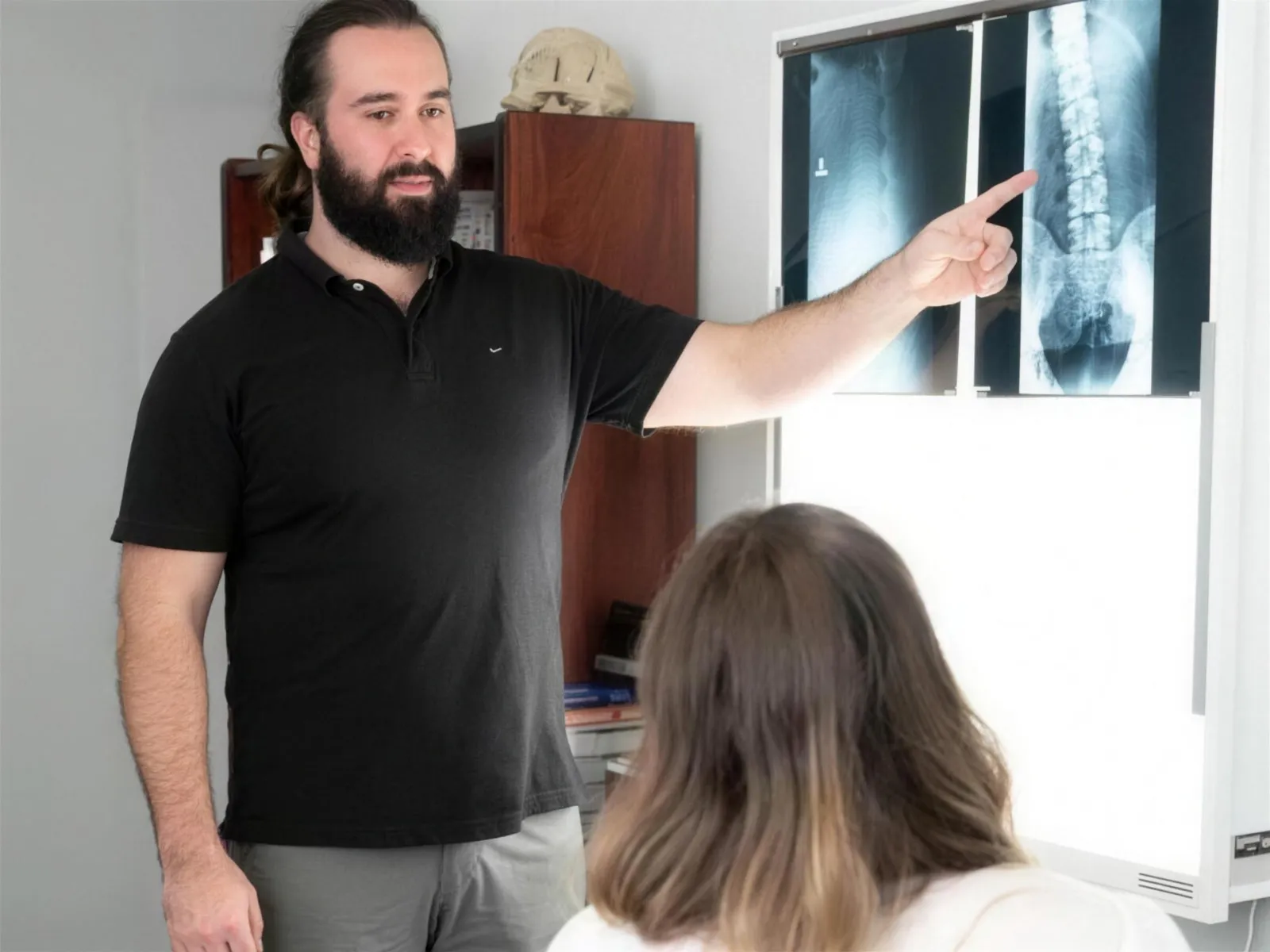
What sciatica is
The sciatic nerve is formed from nerve roots in the lower spine and runs through the buttock and down the back of the leg. When one of those roots is irritated or compressed — often by a disc bulge, sometimes by narrowing around the nerve — symptoms can travel along its path.
Typical symptoms include sharp, burning or electric pain into the buttock, thigh, calf or foot, pins and needles, numbness or a feeling of weakness. Not all leg pain is sciatica; hip, muscle and joint problems can refer pain too.
How we assess leg pain
Your chiropractor takes a careful history and examines your lower back, hips and legs. A neurological examination checks reflexes, skin sensation and muscle strength, and specific tests look at how sensitive the nerve is to movement.
This tells us whether a nerve is likely involved, how significant it is, and whether imaging or a medical opinion is appropriate before or alongside care.
What care may involve
Care is gentle and adjusted to how sensitive your symptoms are. It may include:
- Positions and movements that ease leg symptoms
- Mobilisation, drop table or other lower-force spinal techniques
- Soft tissue work for surrounding muscles
- Graded walking and exercises as symptoms settle
- Advice on sleep, sitting and getting in and out of the car
Living with sciatica day to day
Short, regular walks are often more comfortable than long periods of sitting. Change position frequently, use a pillow between or under your knees at night, and avoid forcing stretches that increase leg pain. Talk to your GP or pharmacist about pain relief if you need it.
Preparing for your appointment
Make a note of where you feel symptoms, any numbness or weakness, and how sitting, walking and lying down affect them. Bring any scan reports. Wear shorts or loose pants so your legs can be examined. Your chiropractor will explain whether your symptoms fit sciatica, what that means, and how they will monitor nerve function over time.
Urgent warning signs
Seek emergency care immediately for:
- New difficulty passing urine, or loss of bladder or bowel control
- Numbness in the saddle area — groin, buttocks or inner thighs
- Rapidly worsening weakness in a leg or foot drop
- Sciatica in both legs at the same time
Further reading: healthdirect — Sciatica
This page is general information only and is not a substitute for individual advice. If you are unsure whether your symptoms need urgent care, call your GP, healthdirect on 1800 022 222, or 000 in an emergency.