
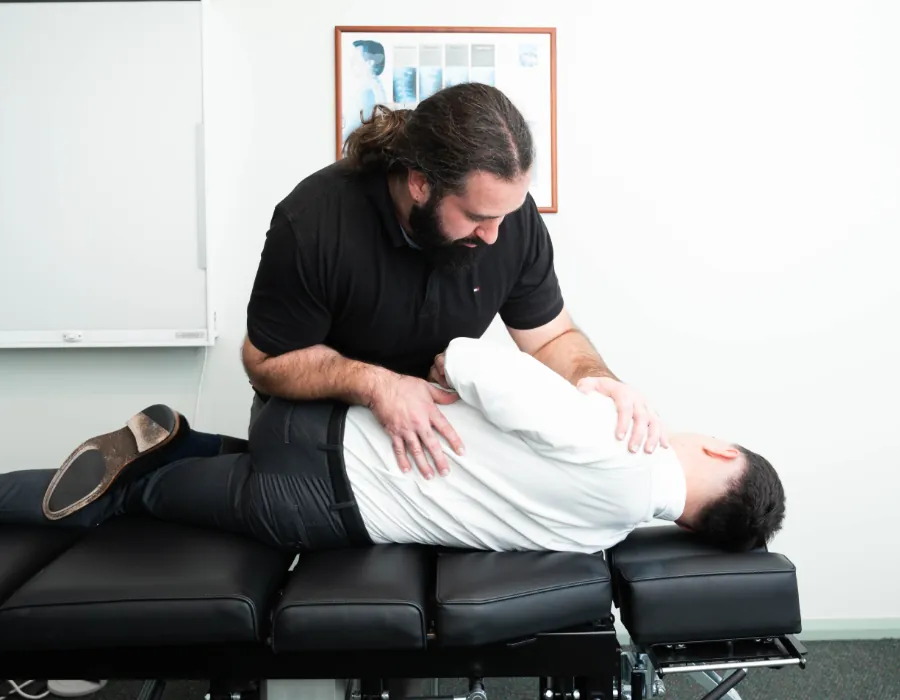
What an adjustment is
An adjustment is a specific, controlled movement applied by hand or instrument to a joint, usually in the spine. Cracking your knuckles is a manipulation; an adjustment is a very specific form of it, where the chiropractor decides which segment to treat and in which direction.
The aim is to improve movement and reduce pain in a joint that is stiff or sore. It is one tool, often combined with soft-tissue work and exercise.
Adjustments may be performed with you lying on your front, back or side, or seated, depending on the area being treated. Your chiropractor should tell you what they are about to do before each movement, so nothing comes as a surprise.
The sound and the sensation
Some adjustments produce a popping sound. This is generally thought to be gas releasing within the joint fluid, not bones moving into or out of place. Whether you hear a sound does not indicate whether the adjustment worked. Some people feel immediate relief; others feel mild soreness for a day or so, much like after exercise.
Who may not be suited to adjustments
Your chiropractor screens for situations where adjustments should be avoided or modified, such as:
- Osteoporosis or other conditions that weaken bone
- Recent fracture, or suspected infection or cancer
- Blood thinners or bleeding disorders
- Significant nerve compression or worsening neurological signs
- Some inflammatory arthritis affecting the neck
Risks, explained honestly
As with any health care, adjustments carry a risk of injury or complication. The clinic notes that reported injuries have often involved a pre-existing condition that had not been diagnosed before an inappropriate technique was used. A thorough examination, x-rays where clinically indicated, and controlled technique help reduce risk. Ask your chiropractor about the risks for your situation.
Gentler options
If you prefer not to have a manual adjustment, or it is not suitable, alternatives include instrument-assisted or low-force techniques, mobilisation, soft-tissue massage and exercise. You can say no to any technique.
Questions to ask before an adjustment
You are entitled to understand any treatment before you agree to it. Consider asking:
- Which joint are you adjusting, and why?
- What might I feel during and after it?
- What are the risks for someone with my history?
- What would you suggest if I would rather not be adjusted?
How it starts
No one is adjusted before an assessment. Your first visit, about an hour, is a history and examination. At a report of findings, about 30 minutes, your chiropractor explains whether adjustments are suitable for you and what else the plan includes. Initial improvement may only be temporary while the body heals, and longer-standing problems can take several visits before change is noticed.
Quakers Hill is north of Blacktown. The clinic has parking and disabled ramp access, and is open weekdays 8am to 12pm and 3pm to 7pm, Saturday 8am to 12pm.
More detail: our chiropractic adjustments guide, and planning a visit from Quakers Hill.