
What nerve pain feels like
Nerve-related pain often feels different from muscle or joint pain. People describe burning, shooting or electric sensations, pins and needles, numbness or a 'dead' feeling, and sometimes weakness. Symptoms often follow a line along a limb rather than staying in one spot.
Where nerve symptoms can come from
Nerve symptoms can arise in many places, including:
- Irritation of a nerve root in the neck or lower back, as in sciatica
- A nerve compressed further along a limb, such as at the wrist in carpal tunnel syndrome
- Medical conditions like diabetes, thyroid problems or low vitamin B12
- Shingles, some medications and other neurological conditions
What a chiropractor can and cannot do
Chiropractors are trained to examine the nervous system as part of a musculoskeletal assessment. If your symptoms appear to come from the spine or a mechanical cause, care may include gentle spinal techniques, soft tissue work, nerve mobility exercises and advice on positions that ease symptoms.
We cannot treat nerve pain caused by diabetes, infection, vitamin deficiencies or neurological disease. In those cases we will recommend you see your GP for testing and medical management.
How your assessment works
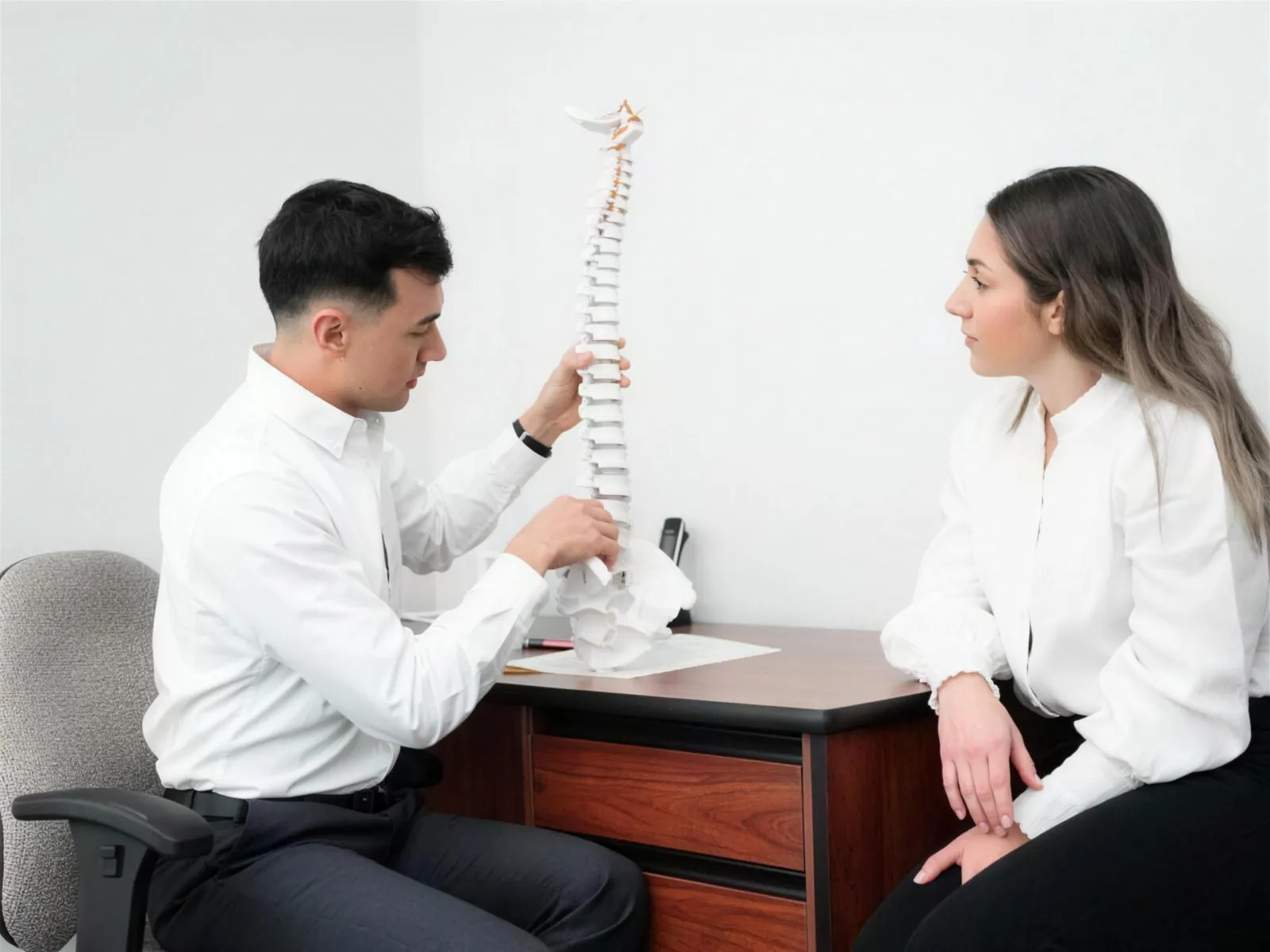
Your chiropractor asks when symptoms started, where exactly you feel them and what makes them better or worse. They test reflexes, skin sensation and muscle strength, and use specific movements to see how sensitive the nerves are. Findings are explained clearly, including any reason to involve your doctor.
Helping us understand your symptoms
Before your appointment, it can help to sketch where you feel symptoms on a simple body outline and note whether they are constant or come and go. List any medical conditions, medications and recent illnesses. These details help your chiropractor decide whether a mechanical cause is likely and whether to recommend medical tests before, or alongside, any musculoskeletal care.
If your GP has already arranged tests, bring the results or referral letter.
Symptoms that need urgent medical care
Seek emergency care for sudden weakness or numbness on one side of the body, facial drooping or speech difficulty, loss of bladder or bowel control, saddle numbness, or rapidly worsening weakness in a limb.
This page is general information only and is not a substitute for individual advice. If you are unsure whether your symptoms need urgent care, call your GP, healthdirect on 1800 022 222, or 000 in an emergency.