
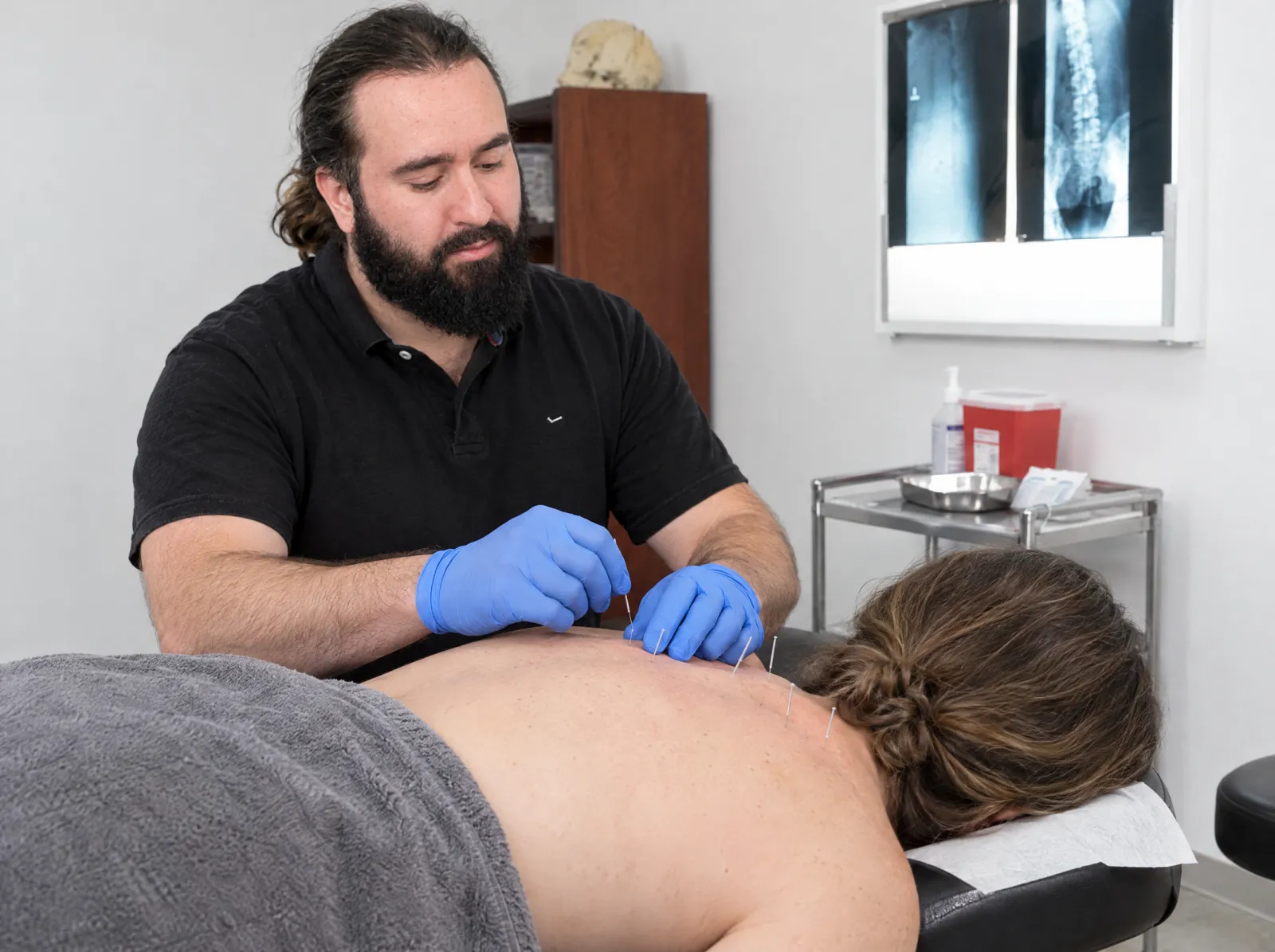
What happens in a dry needling treatment
Dry needling uses very fine, sterile, single-use needles placed into tight or tender areas of muscle. You may feel a brief prick, a dull ache or a small twitch in the muscle. Needles are usually left in for a short time, then removed and disposed of.
It is called 'dry' because nothing is injected. It is not the same as acupuncture: our clinic offers dry needling, not acupuncture.
Your chiropractor will explain which muscle they are targeting, and you can ask to see the sealed needle packaging before treatment begins.
Where it fits in a treatment plan
Dry needling is one of several techniques the clinic uses, alongside adjustments, soft-tissue work and exercise. It is generally used for muscle tension and trigger points as part of a wider plan, not as a stand-alone fix. Research on dry needling shows mixed results, and responses vary from person to person.
Your chiropractor will explain why they think needling may help in your case.
Who should tell their chiropractor first
Needling may need to be avoided or adapted if you:
- Take blood thinners or have a bleeding disorder
- Are pregnant or might be
- Have a needle phobia or have fainted with needles before
- Have diabetes, a skin condition or an immune condition
- Have a pacemaker or implanted device, or lymphoedema in the area
Possible side effects
Short-term muscle soreness, a small bruise or light bleeding at the site are the most common effects. Some people feel tired or light-headed afterwards. Rare but serious complications exist, which is why practitioners avoid certain areas and assess you first. Ask your chiropractor about the specific risks for the area being treated.
Consent and choice
Dry needling is only used after an assessment and with your consent. You can ask for it not to be used, or stop part-way through a treatment. If you would prefer hands-on soft-tissue work or exercise instead, say so.
Aftercare
After needling, keep moving gently and drink water as usual. Some people find heat helpful for any short-lived soreness. Contact the clinic, or your GP, if you notice increasing pain, swelling, redness or fever around a needle site, or shortness of breath after needling around the chest or upper back — seek urgent care for breathing difficulty.
Questions to ask before needling
It is reasonable to ask your chiropractor what they are targeting and why, how many needles they plan to use, how long they will stay in, and what the alternatives are.
Before your first visit
Eat beforehand, wear clothing that allows access to the area, and bring a list of medications. The first appointment is an assessment of about an hour; needling is not automatically part of it.
Kings Park is in the City of Blacktown. The clinic has parking and disabled ramp access, and is open weekdays 8am to 12pm and 3pm to 7pm, and Saturday 8am to 12pm.
More detail: our dry needling guide, and planning a visit from Kings Park.