
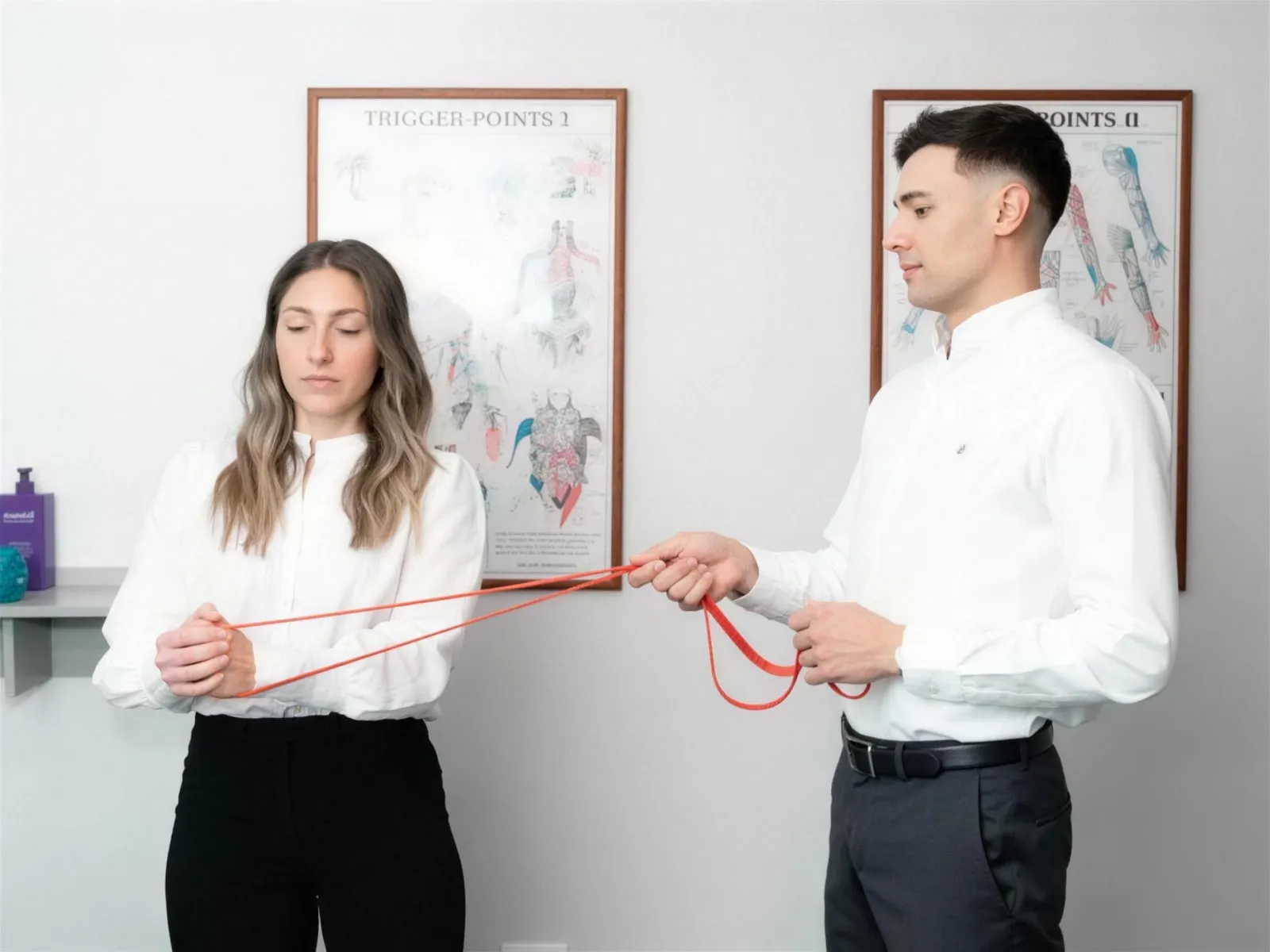
Common types of muscle pain
Muscle strains happen when fibres are overstretched or overloaded, often during sport or lifting. Delayed-onset muscle soreness appears a day or two after unfamiliar exercise and usually settles on its own. Persistent tight, tender areas — sometimes called trigger points — can develop with sustained postures or repetitive tasks.
Muscle pain is usually felt in a specific area and is often worse when that muscle is used or stretched. If your pain is widespread and not linked to activity, our aches and pains page may be more relevant.
How we assess muscle problems
Your chiropractor asks what you were doing when symptoms started and how they have changed. They examine the muscle's strength, flexibility and tenderness, check nearby joints, and look at movements you need for work or sport.
Soft tissue techniques we use
Depending on your assessment and preference, treatment may include:
- Active Release Technique — pressure applied while the muscle moves
- Instrument Assisted Soft Tissue Mobilisation (IASTM)
- Dry needling for suitable tight or sensitive muscles
- Stretching and muscle energy techniques
- Rock tape kinesiology taping for support during return to activity
Recovering well
For a fresh strain, keep moving gently within comfort and avoid aggressive stretching for the first few days. As pain settles, gradually reintroduce strength work and the activities you enjoy. Sleep, hydration and sensible training loads all support recovery.
Your chiropractor will set out a step-by-step plan so you know when it is reasonable to progress.
Your first visit for a muscle problem
Tell your chiropractor exactly what you were doing when the pain started, how quickly it came on and what you have done since. If it relates to sport or training, bring details of your program. They will test the muscle's strength and flexibility, check for signs of a more significant tear, and agree a recovery plan with clear milestones.
When muscle pain is not just muscle
See a doctor if muscle pain follows a new medication (such as a statin), comes with dark urine, significant swelling, fever, or weakness that is getting worse. Calf pain with swelling and warmth, especially after travel or surgery, needs urgent medical review.
This page is general information only and is not a substitute for individual advice. If you are unsure whether your symptoms need urgent care, call your GP, healthdirect on 1800 022 222, or 000 in an emergency.