
What 'sciatica' usually means
Sciatica describes pain that travels from the lower back or buttock down the back of the leg, sometimes with pins and needles, numbness or weakness. It happens when a nerve root in the lower back is irritated, often by a disc. Many episodes improve over weeks to months with conservative care, but recovery varies a lot between people.
Not all leg pain is sciatica. Hip joint problems, muscle pain and circulation problems can feel similar, which is why a proper examination matters.
It also helps to know how sciatica differs from referred pain. Pain that stays above the knee and has no pins and needles is often referred from the back or hip joints, rather than from an irritated nerve root.
Urgent signs — do not wait for an appointment
Go to an emergency department if you have:
- Numbness in the groin, genitals or inner thighs
- New difficulty passing urine, or loss of bladder or bowel control
- Weakness in a leg or foot that is getting worse, or both legs affected
How nerve function is checked
At the first appointment, about an hour, your chiropractor maps where the symptoms go and tests reflexes, skin sensation and muscle strength in both legs. Tests that gently stretch the nerve help show whether it is sensitive. These findings are recorded so change can be measured at later visits.
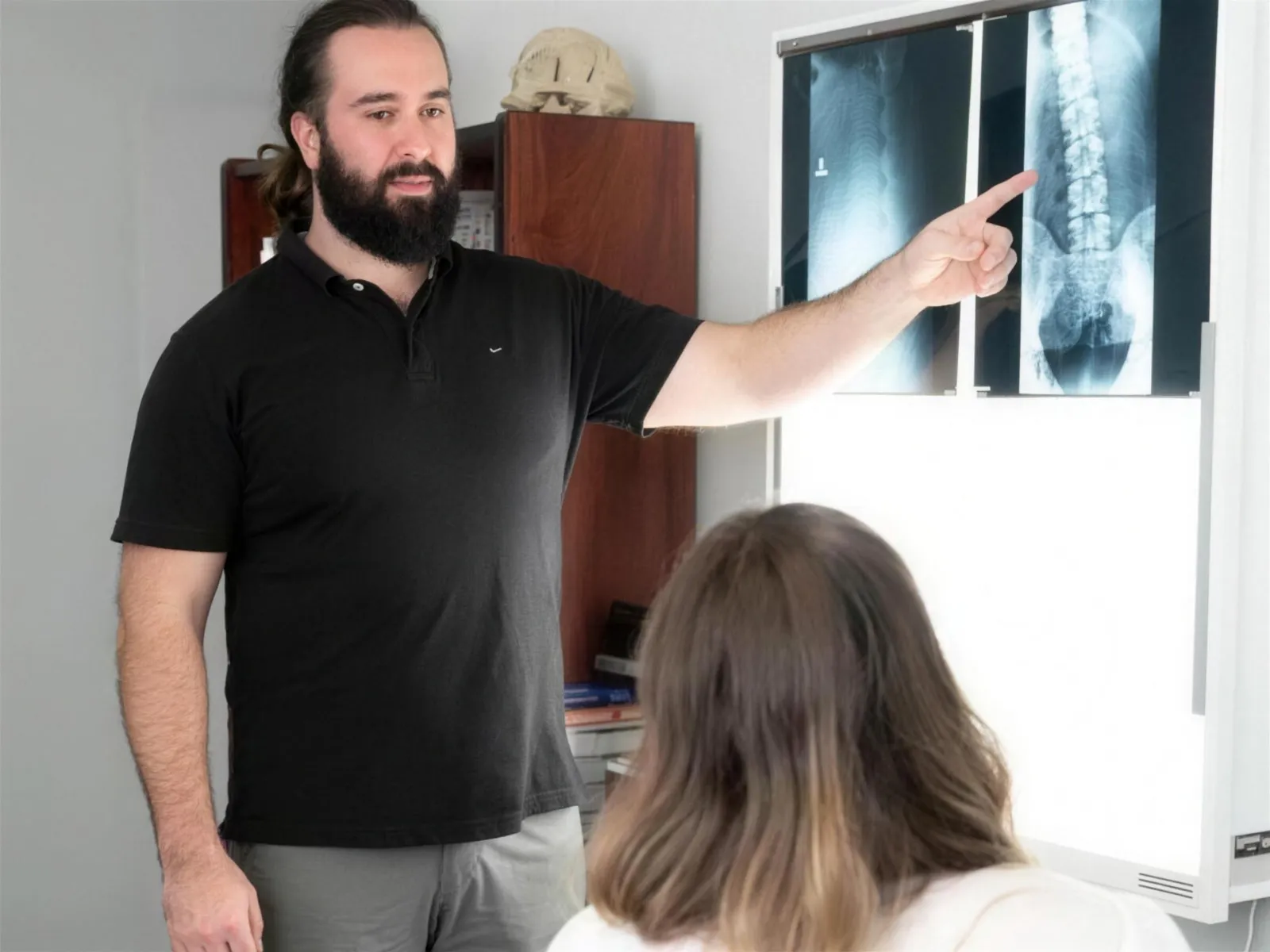
An x-ray may be requested where clinically indicated. If your examination suggests significant nerve compression, your chiropractor may recommend you see a GP about an MRI or a specialist opinion.
When chiropractic care may not be suitable
Chiropractic care is not right for everyone with sciatica. Severe or rapidly worsening neurological signs, suspected fracture, infection or cancer, and some people on blood thinners need medical care first. If care is suitable, plans tend to be gentle at first and may include soft-tissue work, specific adjustments where appropriate, and graded exercises.
Questions worth asking
At your report of findings, a second visit of about 30 minutes, consider asking:
- Do you think this is nerve pain, and from which level?
- Which findings would make you refer me on?
- What activity is safe for me right now?
- How will we measure whether I am improving?
What recovery often looks like
Sciatica rarely improves in a straight line. Good and bad days are common, and a flare does not necessarily mean you have damaged anything. Many people notice that leg symptoms ease first, while some back stiffness lingers. Your chiropractor will compare later findings with your first examination to judge progress, and will refer you on if nerve signs worsen or symptoms fail to change.
Making the trip from Quakers Hill
Quakers Hill is north of Blacktown. Sitting can aggravate sciatica, so if the car is uncomfortable, plan a short stop. The clinic has parking and disabled ramp access. Hours are weekdays 8am to 12pm and 3pm to 7pm, Saturday 8am to 12pm.
More detail: our sciatica guide, and planning a visit from Quakers Hill.